
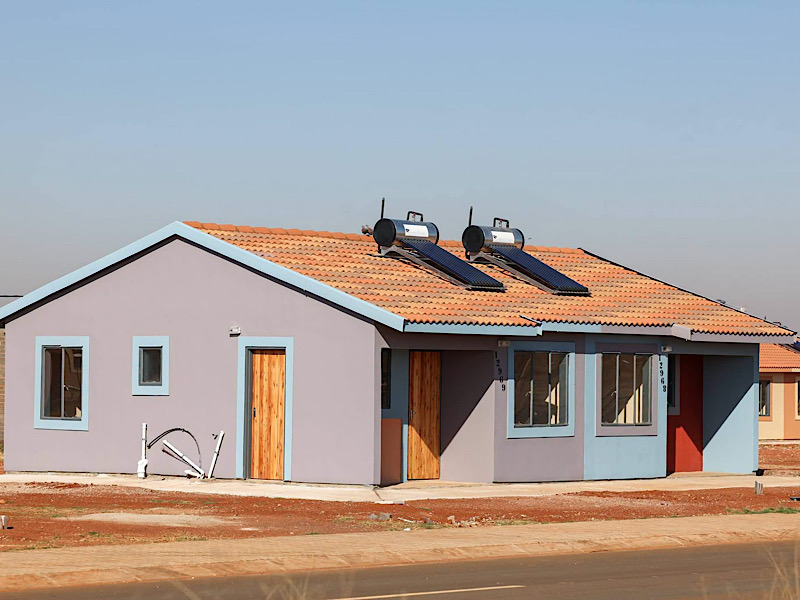
- Government subsidised homes can form part of deceased estates, but over 1.2 million households still lack registered title deeds, blocking secure inheritance.
- South Africans can get wills drafted for free during National Wills Week at participating legal practices, Master’s Offices and selected courts.
Your RDP home can stay in your family after you die. But two things need to be in place first, a title deed proving you own it, and a will saying who should get it.
Many South Africans avoid talking about death. But dying without a will, or without a title deed, can leave a family fighting over a house for years.
An RDP house can only be inherited securely if there is a registered title deed proving the deceased owned it. More than 1.2 million South African households still do not have one, according to Human Settlements Minister Thembisile Simelane, who told Parliament the backlog includes homes built both before and after 1994.
Without a title deed, a house cannot be sold formally, used as collateral, or passed on with legal certainty, leaving families to prove ownership through the courts, a process that can take years and does not need a dispute to drag on.
If you are unsure whether your home has a title deed, you can check at your local Deeds Office using your erf number, or contact your municipality’s human settlements department directly.
Law firm Lange Carr Wessels says a properly written will can make it clearer who should inherit a home once ownership is confirmed. If you die without a valid will, the law decides how your belongings are shared among those who qualify to inherit, a process that can take time and leave families unsure what happens next.
National Wills Week runs from 14 to 18 September 2026. During this week, South Africans can get professional help to write a will for free.
Justice and Constitutional Development Minister Mmamoloko Kubayi is encouraging people to use the opportunity.
“People can walk into our master’s offices across the country and various areas that we have selected courts,” she said.
“The importance of wills is to avoid conflicts when somebody has passed away.”
A will is not only for wealthy people. If you have a house, car, savings or other belongings, a will can make clear what should happen to them, and it matters even more for parents with young children.
Sanlam’s 2026 Legacy Survey found that 65% of South Africans do not have a will at all, and only 28% have one that is signed, witnessed and safely stored.
You must be at least 16 years old and understand what you are signing. The will must be in writing and properly signed, with two witnesses who will not inherit from it, and who are not married to anyone who will.
A will does not automatically decide who gets your retirement fund money. Retirement fund trustees must look at your dependants and nominated beneficiaries before deciding how it is shared.
Financial planner Solani Sibanda from NMG Benefits advises updating a will whenever life changes, marriage, divorce, a new child, a new home, or losing someone named in it. And do not hide it. “There is little value in having a valid will if nobody knows where it is,” Sibanda said.
For RDP homeowners, the message is simple. Check you have a title deed, then make sure you have a valid will. Together, they are what actually keep a home in the family.
Pictured above: South Africans are being encouraged to have valid wills to make their wishes clear about homes and other assets after they die.
Image source: Supplied