
By Thabo Molelekwa for Oxpeckers
- Smart software can link thousands of homes into one virtual power station.
- Experts say the biggest hurdle is no longer the technology but the rules needed to allow households to be paid.
When rolling blackouts started nearly two decades ago, South Africans started investing billions of rands in rooftop solar panels, batteries and backup power, but few imagined those household systems could one day function as a single power station.
Yet that is precisely the promise of Virtual Power Plants (VPPs), which are digital networks that connect thousands of distributed energy resources, allowing software to coordinate when electricity is generated, stored or consumed. Rather than building new power stations, VPPs use infrastructure that already exists.
National utility Eskom says VPPs could play an important role as South Africa’s electricity system becomes increasingly decentralised, but they should complement rather than replace investment in new generation and transmission infrastructure.
The concept is already being deployed in South Africa. Whether it becomes a cornerstone of the country’s energy transition depends less on technology and more on regulation.
Three years ago, Cape Town-based smart energy company Plentify connected 500 households through internet-enabled geyser controllers. Instead of relying on fixed timers, software determined when water should be heated.
According to Plentify, the demonstration reduced peak time-of-use electricity demand by up to 80%, doubled the amount of solar electricity used by geysers and reduced maximum demand by as much as 60%, while households continued to have hot water when they needed it. The trial also showed that coordinated smart controls could avoid the “comeback” surge typically caused when conventional ripple-control systems switch thousands of geysers back on simultaneously.
It wasn’t a one-off.
The company has since expanded the technology across 13 Balwin Properties estates, where about 9,000 intelligent geyser controllers coordinate water heating around periods of high solar generation. According to Plentify, the programme has increased solar energy used by geysers by 79%, reduced peak electricity consumption by 46% and lowered maximum demand by 36%, while residents have benefited from lower electricity costs without sacrificing hot water.
Inverter manufacturer Deye has partnered with Plentify to aggregate approximately 2.7GWh of battery storage already installed in homes and businesses – roughly double the capacity of Eskom’s first utility-scale battery storage project. It will do this by enabling 160,000 Deye residential batteries already installed across the country to be coordinated via Plentify’s VPP platform.
Unlike conventional power stations that generate electricity from a single location, a VPP links thousands of small energy assets – rooftop solar systems, batteries, electric vehicles, smart geysers and other flexible appliances – and manages them through cloud-based software.
Speaking to Oxpeckers, Plentify chief executive Jon Kornik said the technology allows existing household infrastructure to operate collectively.
“Software decides when these devices should consume, store or, where appropriate, supply electricity to maximise value for both households and the grid,” he said.
The impact could be significant.
If 15,000 households delayed heating their electric geysers for a short period during evening peak demand, Kornik estimates the grid could immediately reduce demand by around 45MW, which is comparable to the output of an Eskom diesel peaking plant, but without burning fuel. Households could also be paid for providing that flexibility, he said.
South Africa is unusually well positioned for this model because years of load shedding triggered one of the world’s fastest growth rates in residential solar and battery installations. Millions of electric geysers, one of the country’s largest electricity loads, are already installed across income groups.
“The biggest obstacle is no longer technology but regulation,” Kornik said. “South Africa needs market rules that let households with solar panels, batteries and smart appliances provide grid services and be compensated for it.”
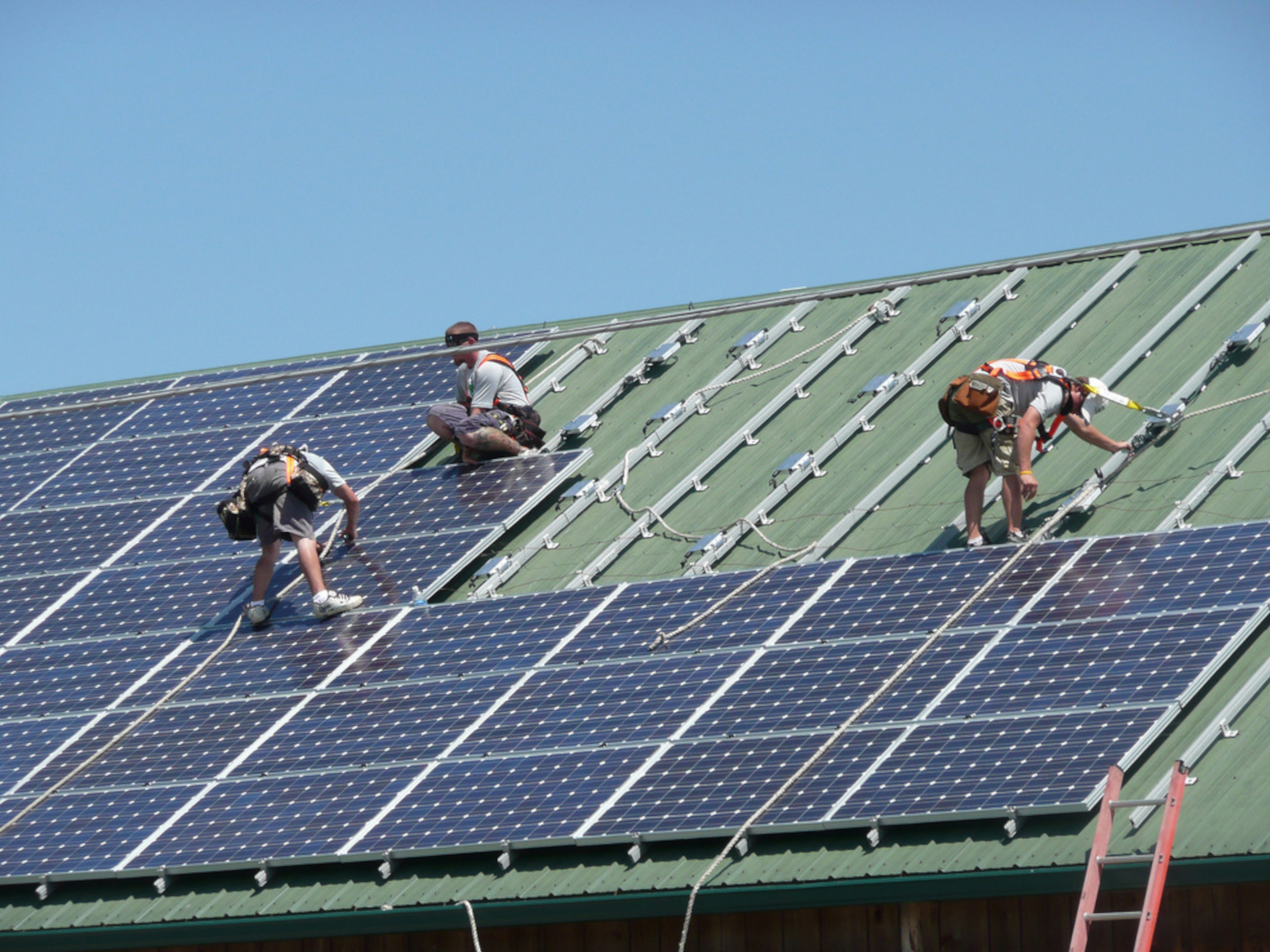
Pictured above: Men on a rooftop installing solar panels.
Image source: Oxpeckers.