
- Former Cosatu president Zingiswa Losi has become the federation’s general secretary, with four other women elected to senior leadership positions.
- Cosatu’s new leadership faces pressure to rebuild workers’ trust, grow union membership and give women a stronger voice in workplace decisions.
Zingiswa Losi has made history again as women take five of the six top leadership positions in South Africa’s biggest trade union federation.
The woman who broke barriers by becoming the first female president of the Congress of South African Trade Unions (Cosatu) has now become its general secretary.
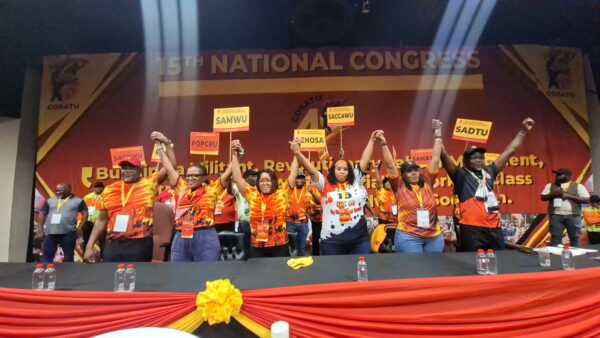
Losi was elected at the federation’s 15th national congress in Kempton Park, where women secured most of the top positions.
Susan Khumalo was elected first deputy president, Mbali Blose second deputy president, Kgomotso Makhupola national treasurer and Gerald Twala deputy general secretary.
Mike Shingange, who previously served as deputy president, takes over as president.
The elections mark a major moment for women in a trade union movement where leadership has long been dominated by men.
For Losi, the breakthrough is about much more than holding a powerful position.
Reflecting on her election as Cosatu’s first female president, she said the achievement inspired women far beyond South Africa.
“The first female president black, I can tell you that echoed not just in South Africa but in the globe,’’ said Losi.
She said women around the world saw her rise as proof that they belonged in leadership.
“Women felt represented. Women saw the breakthrough that COSATU made as a huge step towards women development towards women leadership.”
Losi believes women have always played important roles in their families, communities and workplaces, even when men occupied the most visible leadership positions.
Her message is that women should not only support decisions made by others. They should also be the ones making those decisions.
Her move to general secretary puts her at the centre of the federation’s daily work and its efforts to defend workers.
The position carries major responsibility as Cosatu battles to rebuild its influence and respond to the problems facing working people.
But Losi’s rise also comes with difficult questions about her leadership record.
During her time as president, Cosatu faced criticism from unions who believed the federation had become too quiet on important political and economic issues.
Critics argued that Cosatu had failed to speak strongly enough for workers at a time when jobs were being lost and many families were struggling.
The federation also suffered membership losses over the years as retrenchments, economic problems and labour brokers put pressure on organised labour.
Some unions left Cosatu for the South African Federation of Trade Unions, led by former Cosatu general secretary Zwelinzima Vavi.
These problems cannot all be blamed on Losi, but they form part of the record she must now confront.
Her election also ended Solly Phetoe’s time as general secretary.
The leadership contest exposed deep divisions within Cosatu, particularly over whether the federation should support the African National Congress or the South African Communist Party in local government elections.
Some delegates believed the African National Congress had moved too far from workers’ interests, while others wanted Cosatu to continue working with the governing party.
Losi has defended the federation’s decision to strengthen the African National Congress within the Government of National Unity while pushing it to put workers first.
She has also shown that her work for women extends beyond South Africa.
At an International Labour Organization conference in June, Losi led workers in a difficult debate about the challenges facing women in the workplace.
She said some governments opposed language meant to recognise the different but connected problems women face, including those affecting migrant workers and members of the lesbian, gay, bisexual, transgender and queer community.
The disagreement eventually went to a vote.
Losi said the fight showed what women could achieve when they stood together.
For the newly elected women leaders, the real test now begins.
Their election gives women a stronger place at Cosatu’s leadership table, but workers will want to see results.
That means defending jobs, challenging unfair treatment at work, strengthening unions and making sure women workers are heard.
Losi and her four female colleagues now have the chance to turn a historic leadership breakthrough into real change for the people Cosatu represents.