
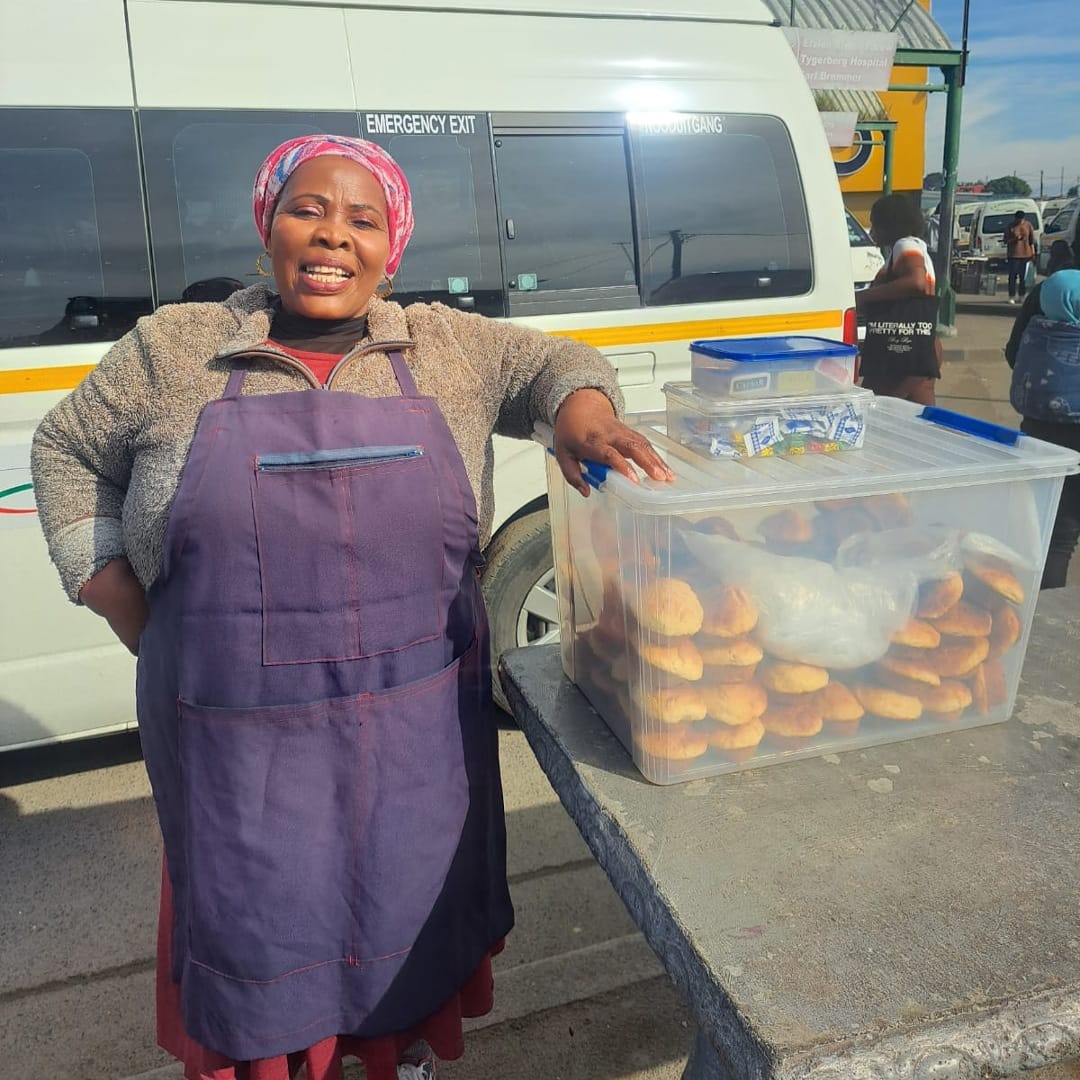
• Nomsakelo Mbokonxa has spent eight years selling scones, sweets and cigarettes at a taxi rank while waiting to qualify for the Sassa Older Person’s Grant at the age of 60.
• She earns about R500 in a good month and says she will continue working even after receiving her pension because the grant will not cover all her living costs.
Every day, Nomsakelo Mbokonxa walks through the busy Mfuleni taxi rank hoping to sell enough scones, sweets and loose cigarettes to buy food for her family.
The 59-year-old has been doing this since 2017.
She is just one year away from qualifying for the Sassa Older Person’s Grant, but until then, selling at the taxi rank is the only way she can survive.
Mbokonxa sells homemade scones for R5 each, chappies for R1 and loose cigarettes for between R2 and R3.
On a good month, she makes about R500.
That money must cover food, electricity and insurance.
“I started selling here when there were only a few traders,” she said.
“Today there are many more because so many people are unemployed and are trying to make money to feed their families.”
Business depends on the weather.
When it rains, fewer people stop to buy from her.
Some days she returns home with unsold scones.
Instead of throwing them away, she lets trusted customers take them on credit.
“I would rather people owe me money than let the food go to waste,” she said.
Mbokonxa says she would still like a formal job, but employers are not interested in hiring someone her age.
“I am too old to find work, but I am not yet old enough to get a pension,” she said.
She says she refuses to depend on handouts.
“I would rather work than beg from people.”
Even when she starts receiving her pension next year, she does not plan to stop selling.
“The grant will help, but it will not be enough because the prices of food, electricity and everything else keep going up.”
Mbokonxa used to arrive at the taxi rank before sunrise.
Now, because of her age, she only starts work at midday.
“I no longer have the strength I had when I was younger,” she said.
One of her regular customers, Nokuzola Mjindi, says she keeps coming back because Mbokonxa’s scones are always fresh.
“They are soft and delicious. I often buy two while waiting for a taxi because they fill me up,” she said.
Thousands of older South Africans face the same struggle.
Many reach an age where finding work becomes difficult, but they still have to survive until they qualify for a pension.
The Sassa Older Person’s Grant is available to South African citizens, permanent residents and recognised refugees who are 60 years or older and meet the income and asset requirements.
The grant is currently worth just over R2,300 a month for people aged 60 to 74, while those aged 75 and older receive a slightly higher amount.
More than four million older people across South Africa receive the grant every month, making it one of the country’s biggest social support programmes.
For many families, the pension is not only used by the elderly person.
It also helps feed children, pay school costs and support unemployed relatives living in the same household.
Thozama Gwente, founder of the United Khula Informal Traders Association, said many informal traders face difficult working conditions.
They often sell without shelters and are exposed to bad weather, crime and law enforcement operations.
Gwente said the organisation encourages traders to register their businesses so they can apply for government support and funding.
But for traders like Mbokonxa, every day is still a struggle.
Until her pension starts next year, she will keep walking through the taxi rank with her basket, hoping to sell enough to make it through another day.
Pictured above: Nomsakelo Mbokonxa sells scones, sweets and cigarettes at the Mfuleni taxi rank as she waits to qualify for her Sassa Older Person’s Grant next year.
Image source: Buziwe Nocuze