
- New research shows how the 2008 financial crisis and the Covid-19 pandemic continue to cause poverty and poor service delivery in South Africa.
- Academics recommend digital solutions like eThekwini’s new paperless system to help governments connect better with communities.
Almost 16 years after the global recession and four years after the Coronavirus pandemic, the consequences are still being felt today.
According to academics, these two global events continue to negatively impact service delivery in many local municipalities.
This was revealed in research on public innovation in KwaZulu-Natal (KZN) local government by Dr Sbongile and Dr Lungile Zondi, presented in Durban.
The academics argue that the 2008 global financial crisis and the Covid-19 pandemic are still contributing to inequality and poor service delivery in South African municipalities.
UKZN’s Professor Sthembiso Myeni emphasised how the 2008 crash disproportionately affected developing countries.
“The global financial crisis triggered widespread economic instability, leading to political polarisation and a decline in democratic governance in many regions.
“More recently, the Covid-19 pandemic exposed deep inequalities, worsening poverty and social exclusion, especially in vulnerable regions. The pandemic also revealed deep challenges, such as a lack of public trust in governments and science,” said Myeni.
The study recommends that governments leverage digital technology to improve services, citing eThekwini’s 2023 paperless initiative as an example.
The city’s new app will soon provide information on bus times, waste collection, and water tanker schedules.
Myeni added that governments must go beyond merely fixing market failures: “Governments should actively shape and co-create markets and economies to build a more inclusive and sustainable future.”
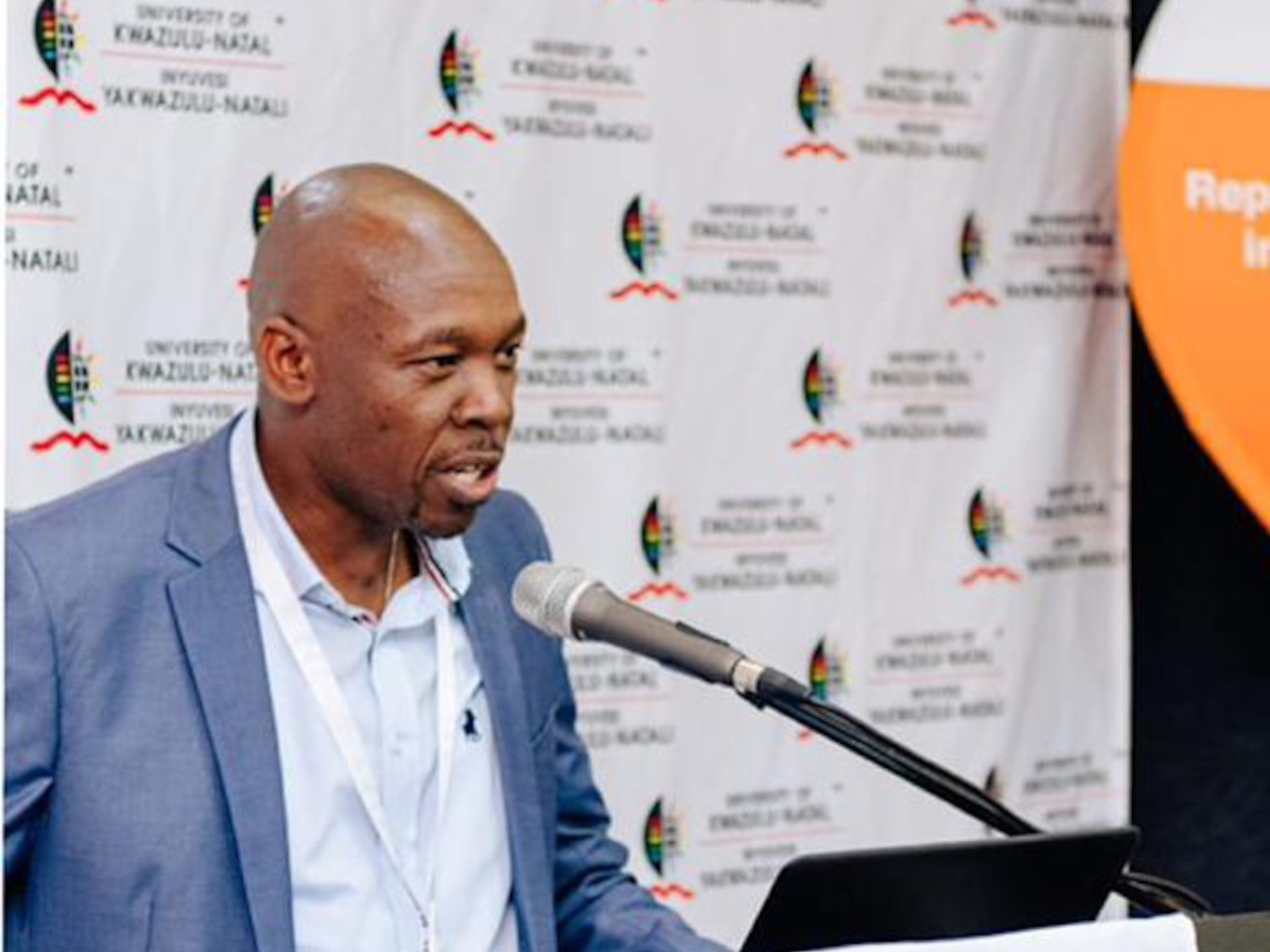
Pictured above: KZN academic Professor Sthembiso Myeni during the unveiling of the research paper.
Source: Supplied