
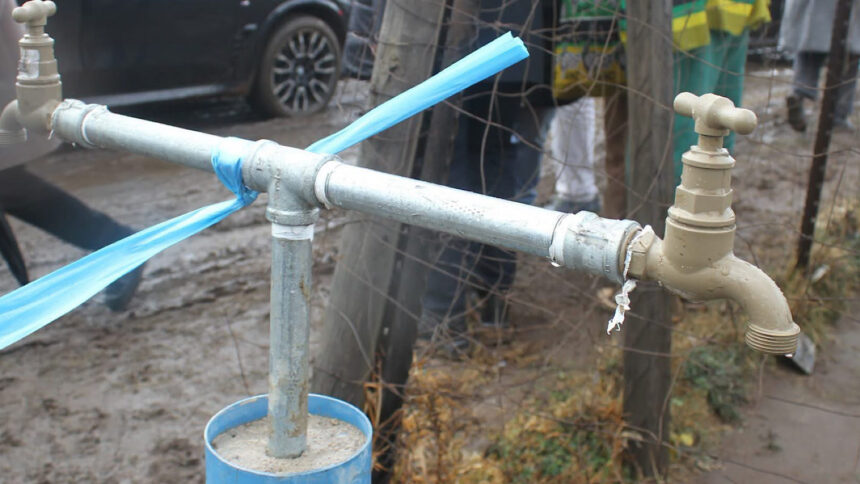
- The crèche pays R450 for a van to bring two loads of water from Rockville and spends another R350 on drinking water.
- A family of nine in Pimville wakes at 5am to check the taps and reuses bathwater to flush the toilet and mop the floors.
A crèche that feeds and cares for 112 children a day in Pimville, Soweto, had to close on Monday after it ran out of water.
Asha day care centre principal, Nobe Ntungwa, says parents may have to pay higher fees if the cuts continue.
Ntungwa first sent children home at noon on Friday, 13 November, when the crèche’s stored water ran out. She said some children rely on the meals they get at Asha day care.
Ntungwa said hiring a van to fetch two loads of water from Rockville costs R450. She spends another R350 on water mainly used for drinking.
“If the situation continues we might have to increase school fees and invest in tanks,” she said.
Ntungwa called on Johannesburg Water to prioritise schools and crèches during water cuts and to help them get storage tanks.
In nearby Pimville Zone 4, Tintswalo Hlongwane said her family of nine had been struggling for four days. Six people live in the main house and three in two back rooms. They have only a few buckets to store water.
“Sometimes the water even runs out before everyone can bath,” she said.
The family uses bathwater to flush the toilet and mop the floors. To do laundry, they check the taps at 5am, when there is sometimes water. On one occasion, Hlongwane said, the family waited for a tanker that never came and spent R100 on transport to fetch water elsewhere.
Johannesburg Water has previously said it restricts the flow of water because high demand makes it hard for reservoirs and water towers to refill. It also cited leaks and illegal connections. The utility said Johannesburg used an average of 1,724 megalitres a day in September, above its Rand Water allocation of 1,528 megalitres a day.
Johannesburg Water spokesperson Nombuso Shabalala told Scrolla Africa that the restrictions could leave households with low pressure or dry taps. She said the impact depended on how much water was entering the system, how full the reservoirs were and how much water people were using at different times of day.
Shabalala said Johannesburg Water was sending tankers to affected communities, though they would only be available at certain times.
Rand Water told Scrolla Africa it was supplying Johannesburg Water with the full amount agreed between the two utilities.