• The rising cost of food, electricity and transport is forcing many families to skip meals and fall behind on bills.
• More than seven out of 10 South Africans say they are under financial stress as salaries fail to keep up with living costs.
For many South Africans, payday no longer feels like good news.
It is simply the day when bills must be paid.
After paying for food, electricity, transport, rent, school costs and debt, many families are left with almost nothing.
New research shows that the cost of living is now one of the biggest worries in the country.
Inflation rose to 5% in June.
Food and fuel were among the main reasons for the increase.
The South African Reserve Bank also kept the prime lending rate at 10.5%.
This means people with home loans, car finance and other debt are still paying high interest rates.
But the real pressure is felt at home.
Families must divide their salaries between groceries, transport, electricity, rent or bond payments, school fees and debt.
There is often no money left for savings or emergencies.
The Competition Commission says inflation does not show the full picture.
Poorer families spend most of their money on basic needs.
This means even a small price increase can cause serious problems.
Electricity prices have increased by about 85% since 2020.
Water prices have gone up by about 68%.
Over the same period, general inflation increased by about 30%.
Food is another major problem.
The Pietermaritzburg Economic Justice and Dignity Group says a basic household food basket costs about R5,502 a month.
A healthy food basket for a family of seven costs about R6,705 a month.
This means many families can buy enough food to survive, but not enough healthy food.
Workers earning the national minimum wage are under even more pressure.
After paying for transport and electricity, many do not have enough money to feed their families properly.
The Child Support Grant also remains too low to cover the cost of a healthy diet for a child.
Buying a house is also becoming more difficult.
BetterBond says the average first home now costs about R1.4-million.
Many first-time buyers earn much more than the average worker.
This shows that home ownership is moving out of reach for many people.
Debt is making the situation worse.
DebtBusters found that 72% of South Africans are under financial stress.
More than half spend over 40% of their take-home pay on debt.
Many people are now skipping meals, missing payments and giving up on saving.
The National Debt Counsellors’ Association says the problem is not always bad money choices.
In many homes, monthly expenses are simply higher than monthly income.
TransUnion found that almost four out of 10 South Africans expect to miss at least one bill or loan payment.
Budget Insurance also found that more than half of people cannot afford to save.
One in six said they had cut down on food to make their money last longer.
Experts say people should be careful before taking on new debt.
But for millions of South Africans, there is already no room left in the budget.
The cost of living has become a daily fight for survival.
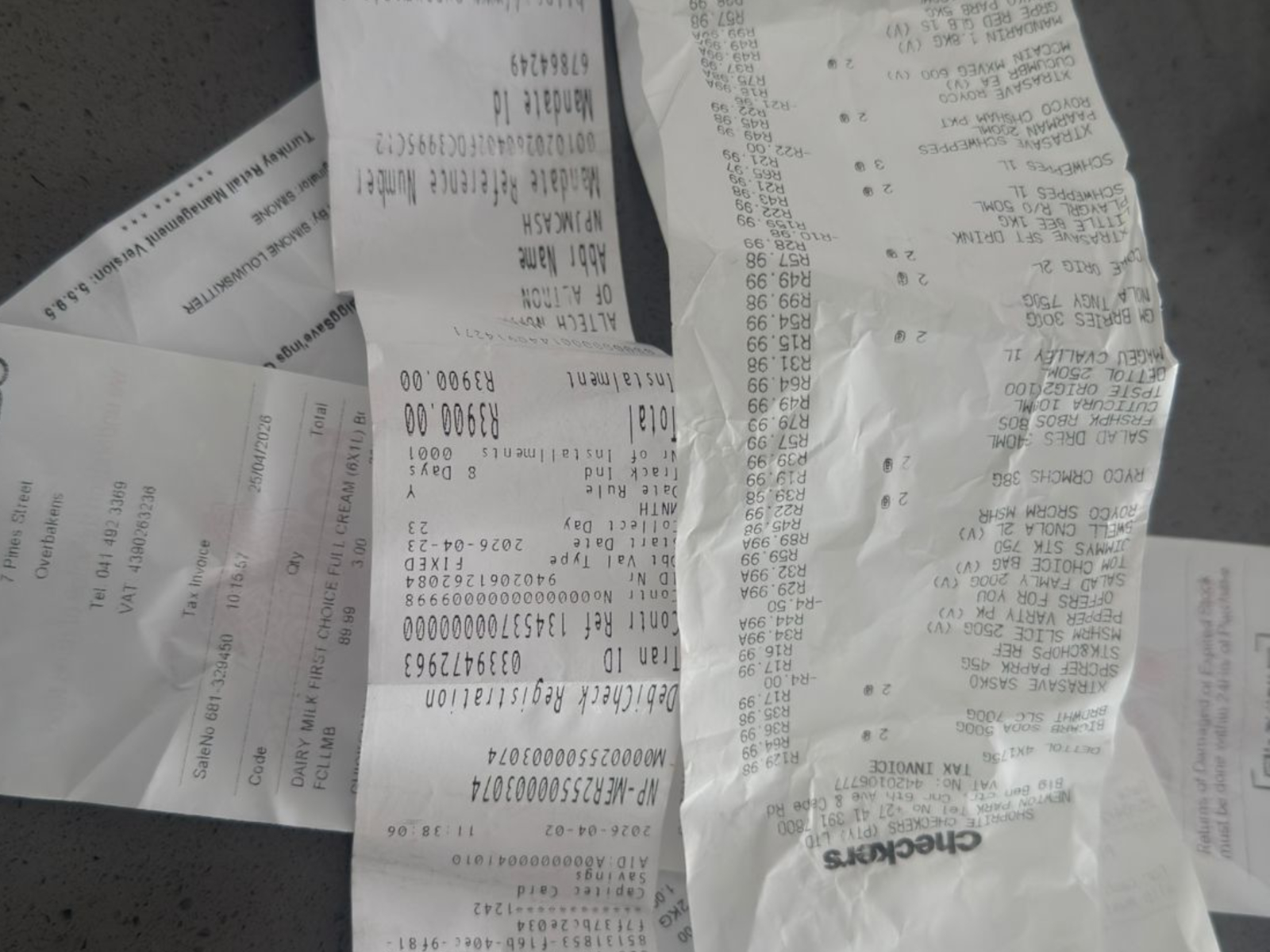
Pictured above: Receipts.
Image source: File.