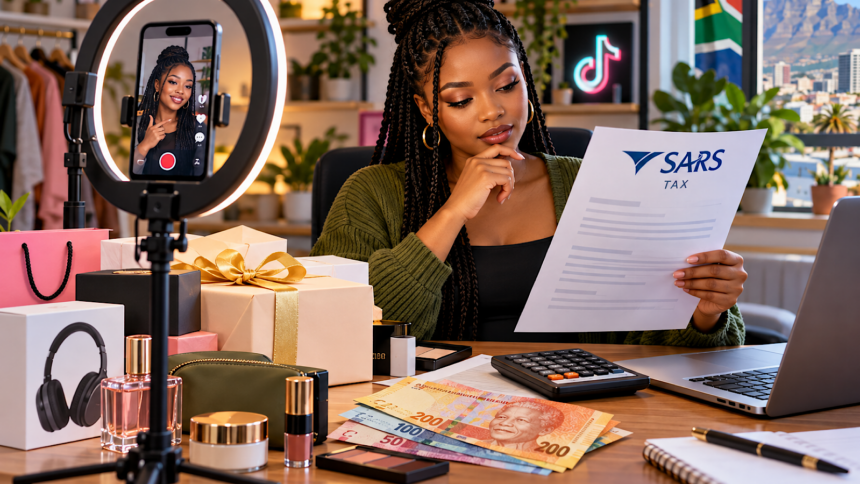
- South Africa’s tax office says content creators must declare all income, including gifts and trips received for posts, valued at market price.
- If you are under 65 and your taxable income is R8,250 or less a month, you pay no income tax.
The South African Revenue Service (SARS) says free gifts, trips and money that creators receive in return for their posts all count as income, and must be declared. But taxpayers under 65 still pay no income tax on taxable income of R99,000 or less a year.
The tax office published a guide for influencers and content creators on 21 October, effective from 20 October. Tax experts say it explains how existing rules apply to creators.
It treats creators who earn from their posts as running a business, many as sole proprietors. All income must be declared, including payments for sponsorships, advertising and subscriptions.
Products, travel and other benefits received in return for content count too, at their market value. Creators should keep contracts, invoices and proof of posts, plus the estimated value of each gift. Gifts that are genuinely unsolicited and not linked to any work depend on the facts.
If you are under 65, you pay no income tax when your taxable income for the 2026/27 tax year is R99,000 or less, which is R8,250 a month. But if you also have a salary and earn from content, the two are added together, so you could end up owing SARS.
Creators paid irregularly may need to register as provisional taxpayers, who pay tax in instalments during the year. Creators must register for VAT once the total they earn from content, before costs, passes R2.3 million in any 12 months.
Creators can choose a simpler system called turnover tax. The tax office says it is not automatically the best choice, because that depends on costs, income sources, payments from foreign platforms and VAT duties.
Tax advisers say residents are generally taxed on income from anywhere in the world, so payments from foreign platforms count too.