
Compiled by Anita Dangazele
- The average salary rose to R21,598 in June, but once you account for rising prices, that money buys less than it has in about two years.
- Electricity, water and other municipal costs are going up even faster than overall inflation, adding extra pressure on top of higher fuel prices.
Getting a slightly bigger number on your payslip doesn’t help much if that money buys less than it used to. That’s what’s happening to South African salary earners right now.
New data that tracks around 2.1 million salaried workers found the average take-home pay rose to R21,598 in June, slightly up from May. But once you work out what that money can actually buy, after accounting for rising prices, it’s really only worth R20,198. That’s the lowest it’s been in about two years.
Economist Elize Kruger told The Citizen prices have been rising faster than pay for months now, so even though people are earning a little more, they can afford less with it.
Over the first six months of this year, pay went up by just 1.5% in total. But once you account for rising prices, workers’ real buying power actually dropped by 2.1% over the same period. That undoes gains people had made over the previous two years.
Fuel isn’t the only thing pushing prices up.
Kruger pointed to costs that government and municipalities set directly, things like electricity, water, rubbish collection and vehicle licence fees. These went up 13.7% in the year to May.
Even leaving fuel out of that number, these costs still rose 7.6%, much faster than the country’s overall price increase of 4.5% at the time. Electricity bills in particular have been going up faster than inflation in many municipalities.
New figures from Stats SA show prices climbing even further, up 5.0% in June, mostly because of higher transport, housing and municipal costs.
Economist Waldo Krugell from North-West University said the real problem is that pay isn’t keeping up.
“Inflation at 5% really eats into your buying power,” he said.
He added that this is also likely to mean people spend less in shops, which could slow down the country’s economic growth this year.
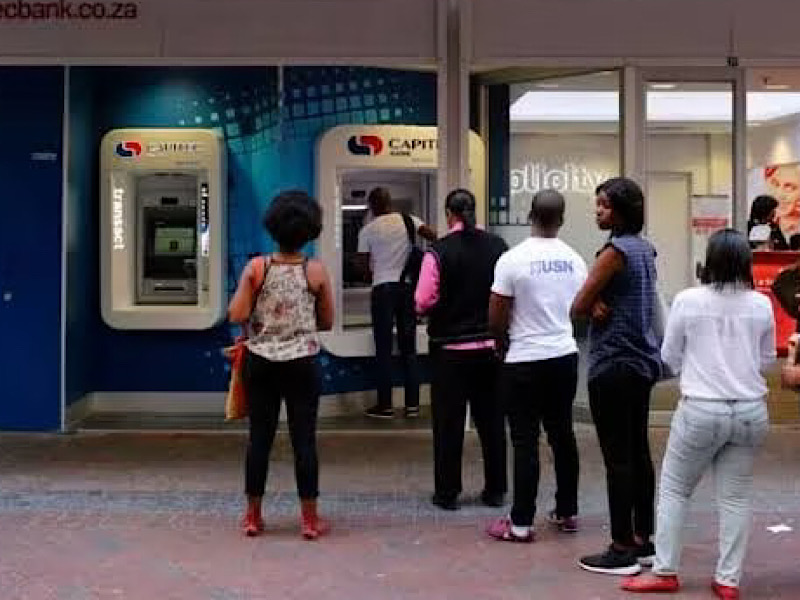
Pictured above: People standing in a bank queue.
Image source: File