
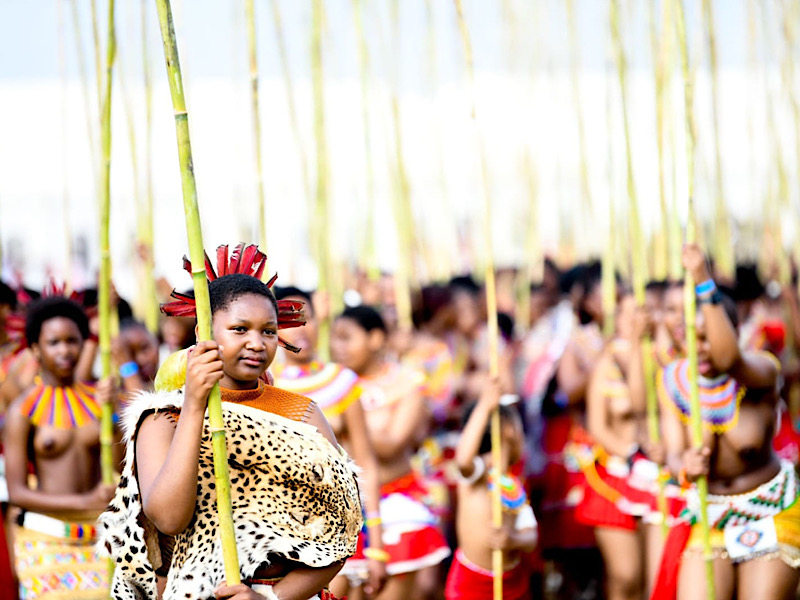
- Thousands of maidens from Malawi, Eswatini and other neighbouring countries joined the 46th annual Reed Dance at eMashobeni Royal Palace over the weekend.
- The ceremony comes months after anti-immigration protests in South Africa, which some neighbouring countries viewed as xenophobic against their citizens.
The spirit of African unity came alive at this year’s Reed Dance, held at eMashobeni Royal Palace in Pongola, northern KwaZulu-Natal, as maidens from several African countries joined the Zulu King to celebrate their heritage.
Thousands of maidens presented reeds to King Misuzulu kaZwelithini over the weekend, at the 46th annual Umkhosi woMhlanga. Maidens from Malawi and Eswatini joined their South African counterparts, alongside reported attendance from Mozambique and Tanzania, celebrating their girlhood together.
The ceremony took place months after anti-illegal immigration protests in parts of South Africa strained relationships with neighbouring countries, some of whom viewed the unrest as xenophobic towards their citizens. Many Mozambicans, Malawians and Tanzanians were affected, with some returning home after fearing for their safety in provinces including KwaZulu-Natal, Gauteng, the Eastern Cape and Limpopo. Despite this, maidens from those same countries travelled to eMashobeni this year, accompanied by their own royal queens, helping to restore a sense of social cohesion through the ceremony.
The Rain Queen, Masalanabo Modjadji VII, who also attended last year’s ceremony, was again present this year.
KZN Premier Thami Ntuli said the presence of maidens from these countries has helped boost the local economy and tourism sector in KwaZulu-Natal and the Pongola community.
“It also goes a long way in making sure that young girls do not involve themselves prematurely in sex, which may expose them to different diseases such as STIs, HIV and others, even early pregnancy, because when that happens, it affects their future and their achievements. This ceremony, this culture, preserves them, giving them an opportunity to prepare for the future,” Ntuli said.
The King’s spokesperson, Mpiyakhe Buthelezi, warned against the misuse of photographs taken during the ceremony, saying images of maidens should not be used to embarrass participants or misrepresent the event. “People are not coming here to be embarrassed. They are here to honour culture. We ask that photos not be taken in ways that disrespect the maidens or distort the meaning of the ceremony,” Buthelezi said.
The Reed Dance has also drawn young women from other racial backgrounds. This year, Anastasia Fourie from Eshowe and Kelly Kleinbooi from Greytown, both white South Africans, took part in the ceremony’s procession, saying they had been drawn to the culture and planned to return next year.
The ceremony began during the reign of the late King Zwelithini kaBhekuzulu at eNyokeni Royal Palace in Nongoma, before King Misuzulu relocated it to Mashobeni Palace in Pongola. In 2013, more than 100 Indian South African women and girls travelled from Durban to take part, as part of the ZAZI empowerment programme supported by the late Zulu Queen Thandi, promoting cultural sharing, health and solidarity among young women.
Pictured above: The annual Reed Dance at Mashobeni Royal Palace, which drew maidens from across the region in a display of social cohesion.
Image source: KZN DSAC