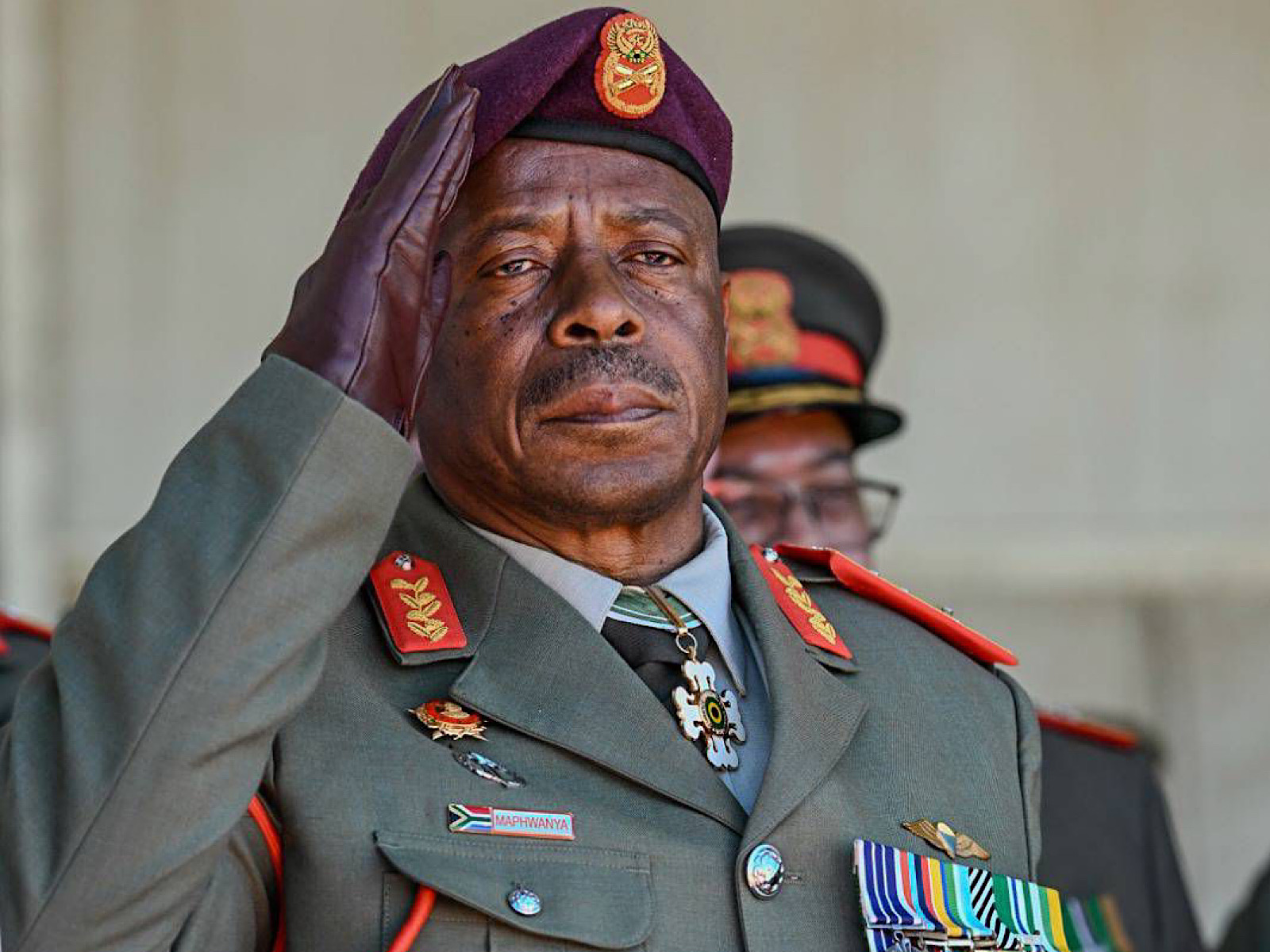
General Rudzani Maphwanya may have upset the West, but many South Africans see him as a truth-teller, not a troublemaker, writes Zukile Majova in Real Politics.
South Africa’s foreign policy is so confusing, it’s no wonder even top officials struggle to explain it clearly.
Now army chief General Rudzani Maphwanya is facing heat for saying what the government itself has been signalling for years — that South Africa backs Iran, supports Palestine, and is no friend of Israel or the United States.
The Department of International Relations and Cooperation (DIRCO) is upset. The Democratic Alliance is furious. And President Cyril Ramaphosa claims he didn’t even know about Maphwanya’s trip to Tehran.
But outside of Parliament and Pretoria offices, many South Africans — especially on social media — are rallying behind the general. Just like they stood by Lieutenant-General Nhlanhla Mkhwanazi for speaking plainly about policing, people see Maphwanya as a rare voice saying things as they are.
The so-called scandal started during Maphwanya’s official visit to Iran. He praised the Iranian government’s stance on Gaza, called for deeper military cooperation between the two countries, and openly supported what Iran sees as its fight against global bullying by the US and its allies.
The DA, now part of the Government of National Unity, says Maphwanya went too far. They’ve called for him to be court-martialled for breaching the military’s code of conduct and stepping outside his constitutional role.
DIRCO echoed the complaint, accusing him of acting like a foreign minister. Ramaphosa said he didn’t sign off the trip. And Defence Minister Angie Motshekga, busy with the national dialogue, hasn’t even met him yet.
Still, none of them are actually calling for real consequences. Why? Because deep down, everyone knows Maphwanya didn’t make up policy — he just said it out loud.
The ANC’s friendship with Iran goes back decades. During apartheid, Iran supported the liberation movement. In return, the ANC has long backed Iran’s right to nuclear power and openly opposed US dominance.
The ANC and South African Communist Party recently hosted Iran’s ambassador. There are even rumours Iran helped fund the ANC’s 2024 election campaign — rumours the ANC hasn’t denied.
So how can the ruling party be shocked when its own army chief speaks the same language in Tehran?
Maphwanya’s trip wasn’t even a surprise. The South African National Defence Force (SANDF) says the visit had been on the cards since last year. It included plans for student exchanges and joint military projects. Whether that’s wise or not, it wasn’t done in secret.
The real problem is timing. South Africa is already under pressure from the US over its pro-Palestine stance. The government’s case at the United Nations court accuses Israel of genocide — while refusing to even mention Hamas. That’s not seen as neutrality. That’s picking a side.
As a result, Washington has hit South Africa with economic penalties. US aid for HIV/Aids programmes — worth over R8 billion a year — has been slashed. South African goods now face a 30% export penalty in the US market.
So, while Maphwanya was welcomed in Iran, the US was sharpening its knives.
Ramaphosa now wants to send a delegation to Washington to patch things up. That mission has just become a lot harder, thanks to the general’s trip.
But let’s be honest. Maphwanya didn’t start the fire. He just walked through it with his head held high.
His message to Iran was in line with South Africa’s recent foreign policy decisions — even if it wasn’t wrapped in diplomatic language.
And for many ordinary South Africans, especially those who support the struggle of Palestinians, he was simply speaking the truth.
The truth is: South Africa is closer to Iran than it has been in years. The truth is: the ANC has taken a clear stand against Israel. The truth is: the government doesn’t always think through how that affects jobs, trade or funding.
Instead of scapegoating the general, the government should decide if it wants to continue on this path. If it does, it must be ready to pay the price — not just in foreign aid, but in global partnerships.
If it doesn’t, then it must say so. And say it clearly.
Until then, people will keep backing the general. Not because they all agree with him. But because, in a country of double-speak and backtracking, someone finally said what the policy really is.
Pictured above: SANDF Chief General Rudzani Maphwanya.
Image source: SANDF