
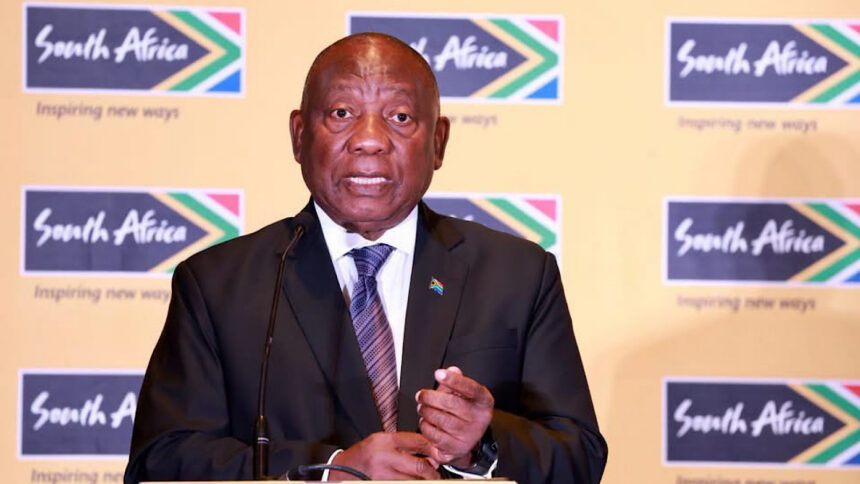
- President Cyril Ramaphosa has urged Silicon Valley investors to help South Africa develop artificial intelligence businesses, create jobs and train local workers.
- Ramaphosa warns that South Africa risks falling behind if it only buys foreign technology instead of developing and owning its own innovations.
President Cyril Ramaphosa wants South Africans to do more than use artificial intelligence (AI). He wants them to build it, own it and make money from it.
Speaking to investors and technology leaders in Silicon Valley in the United States, Ramaphosa warned that South Africa could be left behind as artificial intelligence changes how people work and do business.
Artificial intelligence is technology that allows computers to perform tasks such as answering questions, analysing information and helping businesses work faster.
It is already changing industries around the world, raising questions about which countries will benefit from the new technology and which will simply pay to use it.
Ramaphosa said South Africa must not repeat past patterns where wealth and opportunities were concentrated in the hands of a few.
“We cannot allow the artificial intelligence revolution to reproduce these historical patterns of inequality and dependance,” said Ramaphosa.
“We cannot be content just to merely remain consumers of technologies that are developed by others.”
He wants partnerships with international technology companies that will help South Africans gain skills, start businesses and develop technology locally.
But what does this mean for ordinary South Africans?
If the country develops its own artificial intelligence industry, it could create opportunities for young people looking for work.
These could include jobs in computer programming, technical support, engineering and maintaining the equipment that powers artificial intelligence.
Small businesses could also benefit from technology that helps them manage customers, improve services and reduce costs.
For students, it could mean opportunities to learn skills that are becoming more important in the workplace.
However, these benefits are not guaranteed. They will depend on whether investments lead to real training, jobs and opportunities for local businesses.
There are also concerns that artificial intelligence could replace some tasks currently performed by workers, making access to new skills even more important.
Ramaphosa added that South Africa must have a fair relationship with countries and companies developing the technology.
“As we produce, we export to them, they export to us,” he said.
He also warned that simply building data centres would not be enough.
Data centres are large buildings filled with computers that store and process information. They are important for artificial intelligence, but they do not automatically create large numbers of permanent jobs.
Ramaphosa said the government must improve conditions that encourage companies to invest in South Africa.
His message comes as countries compete to attract investment in artificial intelligence and the businesses that support it.
For South Africa, the challenge is turning that investment into opportunities for people who are struggling to find work or cannot afford expensive technology training.
The country will also need to make sure local businesses can take part instead of leaving the industry entirely in the hands of international companies.
Ramaphosa’s call puts the spotlight on what South Africa stands to gain from the growing artificial intelligence industry.
But the real test will be whether these partnerships create jobs, develop South African businesses and give young people a chance to benefit from technology that is changing the world.
For ordinary South Africans, owning a piece of the artificial intelligence revolution will mean little unless it brings real opportunities to their communities.