
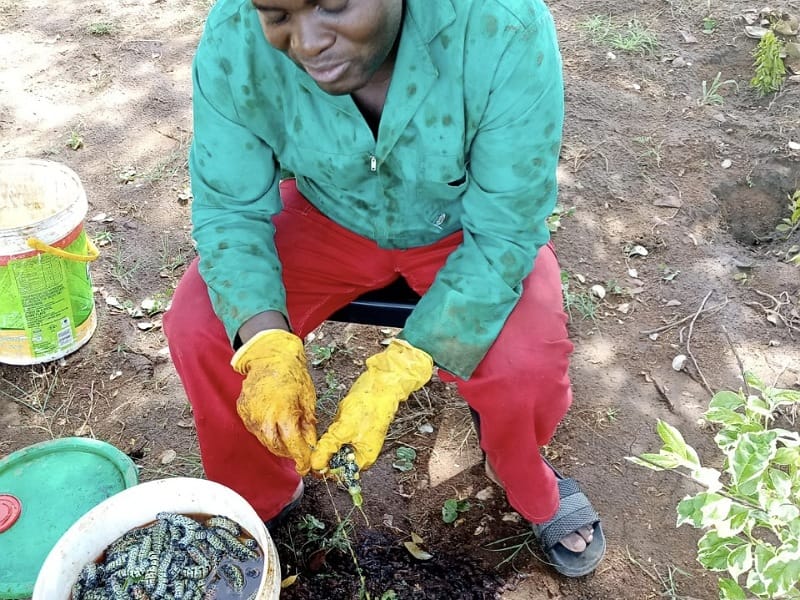
Residents of Limpopo, particularly those in the Mopani District and Lephalale areas, are making the most of mother nature’s seasonal free food basket: mopani worms.
Since December, residents have been catching mopani worms, which are considered a delicacy to many of the locals.
To the untrained eye, these slithery critters might not be the most appetising, but they are widely thought to be packed full of nutrients.
The worms are usually caught just after rainfall between December and January as well as during April every year.
Amos Sambo, from the Shikhumba village in Giyani, who has been catching mopani worms since he was as young as eight, says this season has produced a great harvest.
He attributes this to the heavy rain that fell late last year.
“The worms are found in the mopani trees and sometimes in the marula trees,” he told Scrolla.Africa.
He added that after the trees’ leaves grow and become greener because of the rain, the mopani worms appear, as they feed on the leaves.
His advice to those who want to catch them is to go very early in the morning, as once the sun comes out the worms hide and are difficult to catch. He further urges people to use gloves to protect their hands from being hurt by the worms’ spikes.
This year Sambo again caught his share of the nutritious food for enjoyment. He says he loves eating the worms because it is free food from heaven and keeps his stomach balanced.
Most people hunt them to make extra income. Prices of one pack, which is usually half a cup in volume, are from R30 to R80. Bags for bulk selling can cost up to R2,000.
Traders have been targeting Gauteng dwellers who come back home for the holidays. Most people are even travelling to Botswana to catch and buy the worms there, as they find the neighbouring country’s produce tastier and bigger.
The process it takes from the tree to the plate is the following: first the worms are caught, then the guts or intestines are squeezed out and the worms are washed in water, seasoned with salt and dried in the sun to preserve them. At that point they are ready to be consumed.
Pictured above: Amos Sambo with a bucket of mopani worms
Image source: Supplied