
Compiled by Palesa Matlala
- Farmers are buying antiretroviral medicines on the black market and mixing them into chicken feed despite the practice being illegal and potentially dangerous.
- Health experts warn that drug residues in chicken meat could pose risks to consumers and fuel antimicrobial resistance, while stolen HIV medicine could leave patients without treatment.
A shocking investigation has uncovered claims that some Zimbabwean chicken farmers are secretly feeding HIV medicine to broiler chickens to make them grow faster and reduce deaths.
The medicines, known as antiretroviral drugs or ARVs, are meant to keep people living with HIV alive.
Instead, some farmers are allegedly buying them on the black market and mixing them into chicken feed and drinking water.
The investigation by the Southern Africa Accountability Journalism Project found that the illegal trade is being driven by the promise of bigger profits.
One poultry farmer, Louis* described how easy it was to get hold of the drugs.
“I get my monthly supply from the health official who I knew through another farmer.,” he said.
Adding that his first interaction with the official was when a fellow farmer introduced me to him and immediately paid a deposit to show that ‘’I was serious about making a purchase from him,” he said.
The investigation found that farmers believe the drugs help prevent disease, reduce deaths and get chickens ready for slaughter faster.
One farmer claimed the practice reduced the normal six week growing period to just four weeks.
That means quicker sales and bigger profits.
But experts warn the practice is illegal and could put consumers at risk.
Zimbabwe’s Medicines and Allied Substances Control Act bans the use of medicines intended for humans in food producing animals unless proper approval has been granted.
Health experts warned that people could unknowingly eat chicken containing traces of HIV medicine.
Daniel Zulu, former head of the Toxicology and Clinical Department at Zimbabwe’s Government Analyst Laboratory, said repeated exposure to ARV residues could pose risks for people living with HIV.
Although there is no direct scientific evidence that eating contaminated chicken reduces the effectiveness of HIV treatment, he said the possibility cannot be ignored.
He also warned that people without HIV could face unknown long term health risks from consuming meat contaminated with medicine residues.
The investigation found that the misuse of medicines goes beyond HIV drugs.
Some poultry farmers are also using other antimicrobial medicines to prevent disease and increase production.
The World Health Organization says the misuse and overuse of antimicrobial medicines in people and animals is one of the biggest drivers of antimicrobial resistance, making infections harder to treat.
The Food and Agriculture Organization has also warned that Zimbabwe’s poultry industry is becoming a growing source of antibiotic resistant bacteria.
The investigation also raised alarm over HIV medicines being diverted from patients into the black market.
Zimbabwe has about 1.3 million people living with HIV and about 1.2 million depend on ARVs every day.
Experts fear that every bottle sold illegally is one less bottle available for patients who need lifesaving treatment.
Similar cases have been reported in Uganda and Tanzania, where researchers found ARV residues in animal feed, chicken meat and pig meat.
Despite widespread belief among farmers, no controlled scientific study has shown that HIV medicine makes chickens grow faster.
The findings have sparked fresh concerns about food safety, public health and the growing black market for lifesaving HIV medicines.
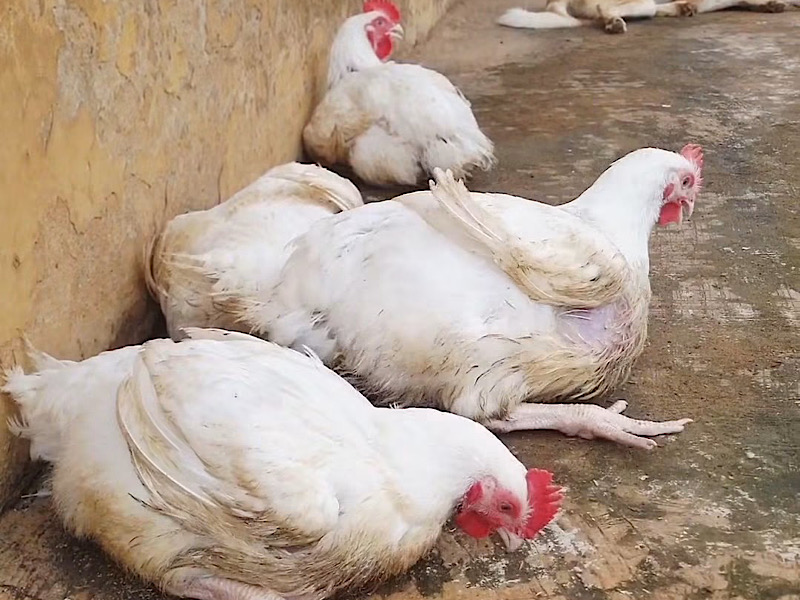
Pictured above: The investigation found that some Zimbabwean poultry farmers are illegally mixing HIV medicines into chicken feed.
Image source: File