Listen to this article.
- Food and non alcoholic drink prices rose by just 0.9% over the year to July, the lowest increase since the 2010 World Cup.
- Meat inflation dropped sharply from 5.1% to 1.5%, while cheaper fuel and smaller municipal tariff increases also helped slow overall inflation.
South Africans struggling to fill their shopping baskets finally have some good news.
Food prices are rising at their slowest rate in 16 years.
Food and non alcoholic drink inflation dropped to just 0.9% in July, helped by an excellent harvest and record grain production.
That means food prices overall are still higher than a year ago, but they are increasing much more slowly.
The last time food inflation was this low was in June 2010, when it stood at 0.7% and South Africa was hosting the football World Cup.
The slowdown could bring some relief to families who have watched the cost of groceries eat deeper into their household budgets.
Fruit and vegetable inflation is also lower, making healthier food choices less expensive than they might otherwise have been.
Even meat prices are rising more slowly despite continued concerns about foot and mouth disease and African swine fever.
Annual meat inflation dropped sharply to 1.5% in July from 5.1% in June.
Cereal products, which include important everyday foods, actually became cheaper compared with a year earlier.
Their annual price change was minus 2%, compared with minus 1.5% in June.
Patrick Kelly, Chief Director for Price Statistics, said food was one of three important reasons for the improvement.
“The slowdown can be attributed to three main factors: Softer inflation for food and non-alcoholic beverages, lower municipal tariff increases and a decline in fuel prices,” Kelly said.
Overall annual consumer price inflation also slowed for the first time in five months.
It fell from 5% in June to 4.3% in July.
Prices increased by only 0.2% between June and July, compared with a 0.7% monthly rise in June.
“Food and non-alcoholic beverage inflation slowed to 0.9 percent in July, its lowest level since June 2010, when it was 0.7 percent,” Kelly said.
“Incidentally, that was the month that South Africa hosted the World Cup.”
Households also received some relief from smaller increases in municipal tariffs compared with last year.
Electricity tariffs increased by 8.1% in 2026, compared with a 10.4% increase in 2025.
Water tariffs went up by 10.2%, lower than the 12.1% increase recorded last year.
Transport inflation also cooled sharply.
It dropped from 12.9% in June to 8.9% in July, helped by falling fuel prices.
The numbers do not mean that food, electricity, water and transport have suddenly become cheap.
Families are still paying more for many basic needs.
But the slower increases mean household costs are no longer climbing as quickly as they were.
And for consumers who have spent years watching grocery bills climb, food inflation below one percent offers some welcome breathing room.
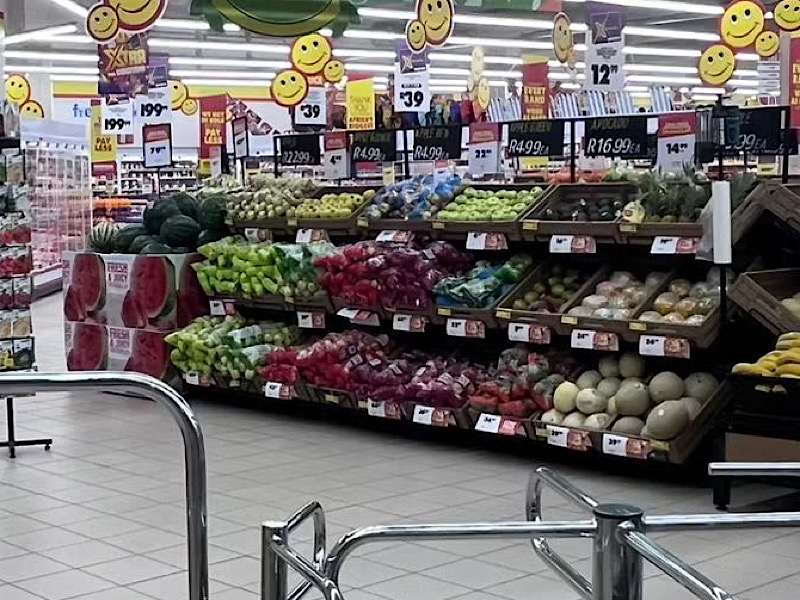
Pictured above: Food prices rose at their slowest annual rate in 16 years during July.
Image source: File.