
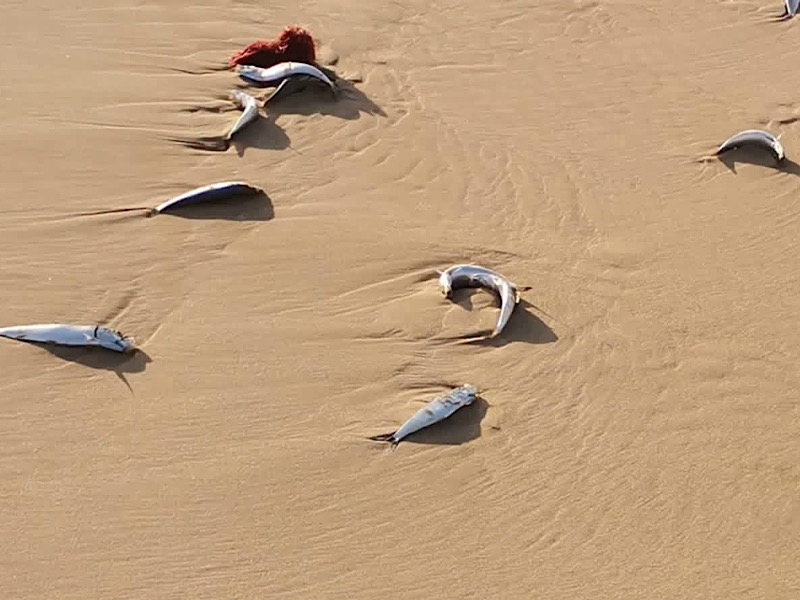
- Government has confirmed a virus called Pilchard Herpesvirus in sardines found dead or dying along the Eastern Cape coast.
- The die-off has spread along most of South Africa’s coastline since late July, reaching as far as Namibia.
If you’re seeing dead or dying sardines washing up on Eastern Cape beaches, don’t touch them, eat them, or feed them to your pets.
The Eastern Cape provincial government says it’s investigating unusual sardine deaths and strandings along the province’s coastline.
The Department of Forestry, Fisheries and the Environment and national fisheries authorities have confirmed the presence of a virus called Pilchard Herpesvirus, or PHV, in sardines that were tested.
The good news: officials say this virus is not known to infect humans or other animals. But they’re still warning people to stay away from any dead or dying fish they find, since decomposing fish can carry other harmful germs that are dangerous to touch or eat.
Here’s what to do if you come across stranded sardines:
Don’t collect, handle, or eat any dead or dying sardines found on the beach or in the water
Don’t feed them to your pets or other animals
Avoid touching stranded or dead fish altogether
If you’re worried about canned sardines from the shop, you don’t need to be. Government says commercially canned sardines, made under proper food safety rules, remain completely safe to eat. This warning only applies to fish found washed up or dying on beaches.
How big is this? What’s happening in the Eastern Cape isn’t an isolated event.
Sardines started washing up dead on the West Coast, near Saldanha Bay, in late July. Since then, the die-off has spread along most of South Africa’s coastline, reaching Cape Town and Tsitsikamma in August, then Gqeberha in the Eastern Cape in late August, and now Buffalo City and the Wild Coast as of this week. Namibia has also reported dead sardines washing ashore and is sending samples for testing.
Scientists aren’t yet certain the virus is the actual cause of the deaths. It’s currently the leading explanation, but researchers have also found the virus in some healthy fish, so they’re still investigating whether other factors, like cold water or low oxygen levels, played a role too. Researchers from Nelson Mandela University are assisting the national department with the investigation.
If you spot a large number of dead fish or a big stranding, report it to your local municipality so it can be properly assessed and cleared away.
Pictured above: A virus has been found in sardines washing up dead along the Eastern Cape coast.
Image source: GQ Swim/Facebook