- Cosatu fears thousands of farming and factory jobs are at risk and wants government to negotiate with Washington and prepare a rescue package.
- The EFF wants urgent support for affected industries and new export markets, saying South Africa must not bow to US pressure.
Thousands of farming and factory workers could pay the price for South Africa’s worsening relations with Washington, Cosatu has warned.
The labour federation wants government to fight to save jobs after US President Donald Trump gave notice that South Africa would lose its trade benefits under the African Growth and Opportunity Act (AGOA) from 1 January 2027.
AGOA allows qualifying goods from eligible African countries to enter the US without import duties.
US Trade Representative Jamieson Greer confirmed on Monday, 2 November, that Trump had notified Congress and the governments of South Africa and Rwanda of his intention to remove both countries.
Greer said an annual review found that they were not meeting the programme’s requirements.
Washington’s concerns about South Africa include barriers to American trade and investment, corruption, and threats to US national security and foreign policy interests.
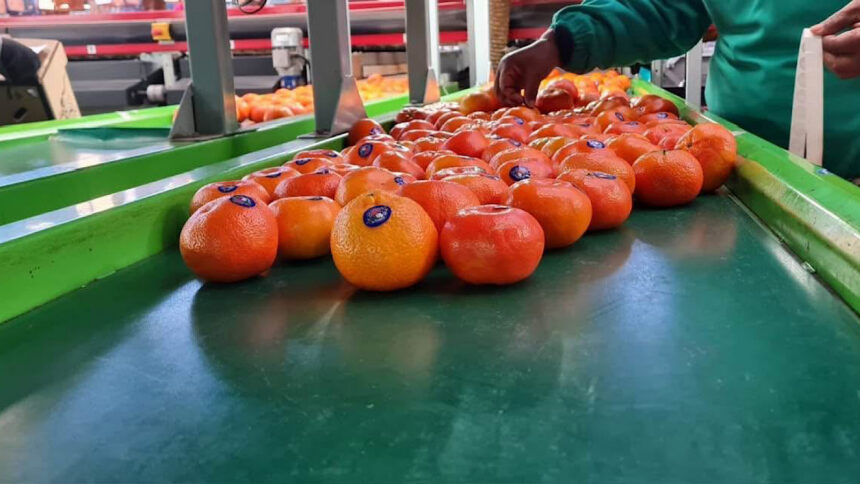
Cosatu says thousands of agricultural and manufacturing jobs linked to the programme could be affected.
It says workers have already lost jobs at factories and companies in Cape Town, Atlantis, Malmesbury and Tulbagh, leaving families struggling.
The federation wants government to use the remaining two months to negotiate a solution with Washington while preparing help for workers and businesses.
Its proposed rescue package includes subsidies, incentives, tax relief and support through the Unemployment Insurance Fund. It also wants faster efforts to find customers in Canada, Brazil, Europe, Asia and across Africa.
“We cannot afford to abandon a single worker, business, industry or community,” Cosatu said.
Losing AGOA benefits would not stop South African companies from selling goods to the US. But losing the tariff advantage could make their products more expensive for American buyers, putting pressure on orders and jobs.
The Department of Trade, Industry and Competition says about 10% of South Africa’s exports to the US entered under AGOA in 2025, down from 28% in 2024.
Those exports were worth about $1.7-billion in 2025, compared with $4-billion the previous year. They accounted for roughly 1% of South Africa’s total exports worldwide.
Government says it is working with affected businesses to assess the damage and provide support. It has also accused Washington of raising new issues that were not part of trade negotiations which began in 2025.
Cosatu also blamed lobbying by AfriForum and Solidarity for damaging relations with Washington.
Solidarity rejected that argument. Its head of public relations, Jaco Kleynhans, blamed the government’s foreign policy and public statements, saying the organisation had repeatedly warned that these were putting South Africa’s AGOA membership at risk.
The EFF said on Tuesday, 3 November, that the US decision was neither unexpected nor unprecedented.
It described the move as part of a campaign of hostility and economic pressure against South Africa for making its own decisions.
The party pointed to South Africa’s case against Israel at the International Court of Justice, its ties with Russia, China and Iran, and its membership of BRICS.
The EFF argued that AGOA allows Washington to pressure African countries to follow its political line.
The party has called for urgent help for affected industries, a plan to protect jobs and a stronger push to find other export markets.
“South Africa must trade with the world, not be bullied by it,” the party said.