- Babita Deokaran uncovered suspicious payments before six hitmen murdered her, but investigators have still not identified who ordered and paid for the killing.
- Acting Police Minister Firoz Cachalia says the corruption exposed at Tembisa Hospital reflects a wider problem across government and local municipalities.
Five years after whistleblower Babita Deokaran was shot dead outside her Johannesburg home, one painful question remains unanswered: who ordered her murder?
Deokaran, 53, was acting chief director of financial accounting at the Gauteng Department of Health when she raised the alarm over suspicious payments linked to Tembisa Hospital.
Days before her murder, she warned her bosses that she feared for her life.
She received no protection.
Then, in 2021, six hitmen ambushed and killed her in the driveway of her home.
The gunmen are now behind bars, but the person or the people who ordered and paid for her murder still have not been identified.
On Sunday, Acting Minister of Police Firoz Cachalia joined a commemoration in Johannesburg marking five years since Deokaran’s assassination.
He said the corruption exposed through the Tembisa Hospital scandal was not limited to one hospital or department.
“That problem of systemic corruption that we see in Tembisa Hospital is one that is pervasive in many government departments, in local governments across our country,” Cachalia said.
“It is the disease; it is the illness that is eating at the country’s hopes and possibilities.”
R800-million warning grows into R2-billion scandal
Before her death, Deokaran had uncovered more than R800-million in separate payments involving at least 200 alleged shell companies.
The Special Investigating Unit has since placed the scale of the alleged corruption at about R2-billion.
Investigators have uncovered what they say are three criminal syndicates linked to the scandal.
The Special Investigating Unit has linked its investigation to businessmen Hangwani Maumela and Vusimusi “Cat” Matlala.
Both remain under investigation.
Cachalia acknowledged concerns that corruption within government systems could be protecting people involved in criminal activity.
But while investigators continue digging into the money trail, Deokaran’s family and supporters are still waiting for answers about the people behind her assassination.
Who paid the killers?
Ahmed Kathrada Foundation executive director Neeshan Balton said catching the six hitmen was not enough.
“What we haven’t seen is identification of the people who paid her killers. Nor have we seen a change of the systems that enable this corruption,” Balton said.
The Active Citizens Movement said the best way to honour Deokaran would be to build an ethical public service where whistleblowers are protected instead of being left exposed.
The organisation wants managers, including senior government leaders, to be held responsible for protecting employees who report corruption.
It said the proposed Protected Disclosures Bill would not, on its own, have saved Deokaran because action is also needed from managers once a threat is reported.
The movement said nobody within the Gauteng Department of Health had been held accountable for failing to protect Deokaran after she raised concerns about her safety.
It is calling for an independent, well funded body to protect whistleblowers.
Such a body, it said, should provide legal advice, legal defence, counselling and financial support while also protecting whistleblowers’ identities and evidence.
Corruption can become deadly
The Active Citizens Movement warned that the battle against corruption is not only about missing public money.
It can become a fight for survival when criminal syndicates use threats and violence against people who stand in their way.
It described this as a “politics of death”, involving threats, punishment, violence and assassination.
The organisation also warned that corruption is damaging the healthcare system while blame is unfairly directed at foreign nationals.
Five years after Deokaran’s death, the six men who carried out the killing have been convicted.
But until those who ordered and paid for the murder are identified, the biggest question surrounding her assassination remains unanswered.
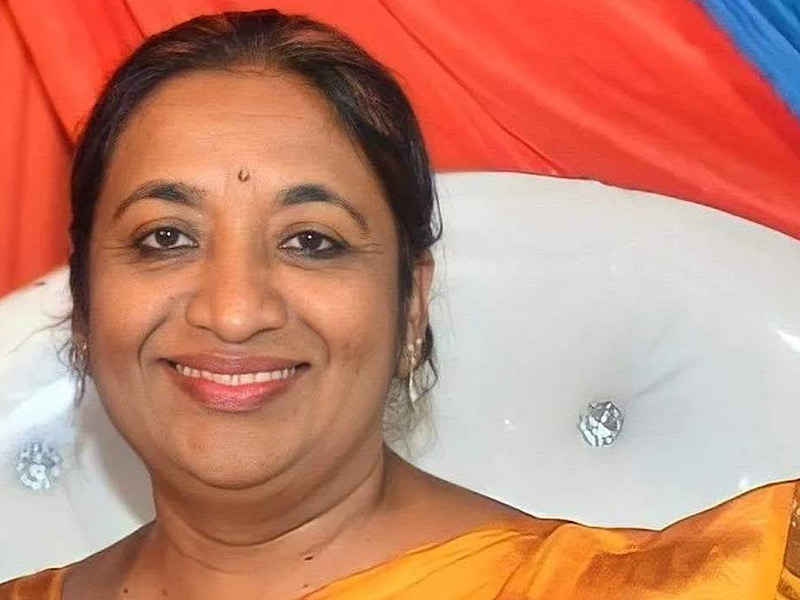
Pictured above: Whistleblower Babita Deokaran, who was murdered after exposing suspicious payments linked to Tembisa Hospital.
Image source: File