
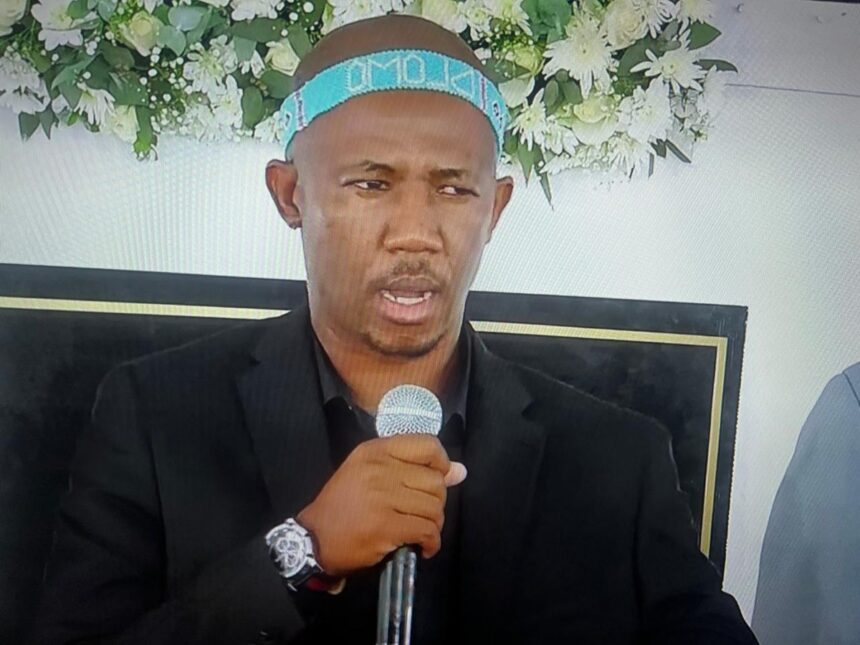
- Inkosi Zanothando Mtirara has questioned South Africa’s high fuel prices after reports showed Botswana sells petrol for about R8 less per litre.
- The abaThembu leader wants African countries to process their own minerals, create jobs and use their natural wealth to improve people’s lives.
An abaThembu traditional leader has slammed South Africa’s high petrol prices as exploitation after learning that motorists in Botswana pay about R8 less per litre, despite the country buying most of its fuel from South Africa.
Inkosi Zanothando Mtirara, who heads the Mthatha West Traditional Council under the abaThembu Kingdom in the Eastern Cape, says South Africans should benefit more from their country’s natural resources.
His reaction follows a BusinessTech report showing that Botswana motorists pay about R21.85 for a litre of 95 unleaded petrol, compared with R30.25 in inland South Africa.
The price difference comes as South African motorists face sharp fuel increases.
Petrol rose by R3.33 a litre on 7 October, pushing the inland price of 95 unleaded petrol above R30.
Higher international oil prices, supply shortages and rising shipping costs have contributed to the increases.
Botswana, which gets much of its fuel from South Africa, has not increased its retail petrol prices since July.
The two countries have different fuel pricing systems and taxes, which help explain the gap.
South Africa’s petrol price includes a general fuel levy of R4.10 a litre and a Road Accident Fund levy of R2.25.
But Inkosi Mtirara believes the fuel price difference raises bigger questions about how South Africa and other African countries manage their natural wealth.
He wants governments to stop depending so heavily on exporting raw minerals and instead build industries that create jobs at home.
“South Africa must move beyond being merely an exporter of raw materials and become a leading centre of mineral processing, manufacturing and value-added production,” said Inkosi Mtirara.
He said Africa has valuable minerals, including lithium, platinum, manganese, chrome and cobalt, which are important to the world economy.
But he believes African communities are not getting enough benefits from these resources.
He called on the government to review mining policies and consider limiting exports of certain raw minerals where local processing is possible.
Such changes, he said, could encourage factories to process minerals and turn them into products that can be sold locally and overseas.
Inkosi Mtirara also wants traditional leaders to have a stronger voice in decisions about mining on community land.
“Traditional leaders also have an important role to play in this economic transformation. Our communities are custodians of land and are directly affected by mining activities,” he said.
He wants mining companies to provide jobs, skills training, business opportunities and better infrastructure for communities living near mines.
He said mineral wealth should not benefit only big companies while surrounding communities continue to struggle with poverty and unemployment.
The traditional leader also questioned the role of the Brics bank during difficult economic times.
Speaking to Scrolla.Africa, he said Brics countries should have strengthened the bank to help member countries facing financial pressure.
He believes African countries should not have to depend so heavily on financial assistance from the United States and Europe.
Inkosi Mtirara said South Africa must also deal with expensive and unreliable electricity, poor infrastructure, limited business funding and a shortage of skilled workers.
He warned that simply stopping raw mineral exports would not solve these problems.
African governments, he said, should work together to build factories and industries that process minerals and manufacture products.
He called for stronger cooperation between government, traditional leaders, workers, businesses, universities and communities.
Inkosi Mtirara believes Africa must move away from exporting its wealth in raw form and start building industries that will benefit future generations.