
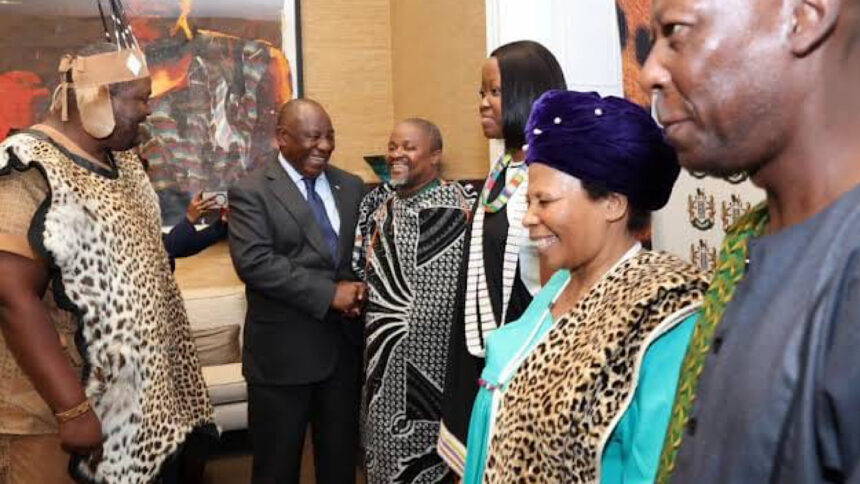
- Motshekga argues that royal leadership should be recognised separately from chiefs and village headmen and women.
- The Constitution already recognises traditional leadership, while legislation distinguishes between several leadership positions.
Professor Mathole Motshekga has called for changes to South Africa’s Constitution to draw a clearer line between monarchs and other traditional leaders.
Motshekga, a senior royal figure associated with the Bolabedu Kingdom, argues that grouping kings, queens and chiefs under traditional leadership fails to properly reflect African systems of governance.
In writings shared with Scrolla.Africa, he said colonial influence had shaped the way African monarchies are treated in South African law.
“Sections 211 and 212 recognise traditional leadership. These sections fail to distinguish between royal and traditional leadership,” Motshekga said.
He wants the Constitution to explicitly distinguish royal leadership from the leadership exercised by chiefs and village headmen and women.
The Constitution already recognises the institution, status and role of traditional leadership according to customary law, subject to the Constitution. Section 212 allows legislation to provide for its role in matters affecting local communities.
The Traditional and Khoi-San Leadership Act also distinguishes between kings or queens, principal traditional leaders, senior traditional leaders, and headmen or headwomen. Motshekga’s argument is that royal leadership needs separate constitutional recognition.
He described African customary governance as having three connected levels: the royal institution, the chieftaincy and the village.
In his explanation, monarchs appoint chiefs, who in turn appoint village headmen and women to look after communities.
He said these levels also have corresponding customary courts.
“These three spheres have three corresponding court spheres which are Royal or regal court, Chiefs courts and Village courts. Appeals lie from Village Courts to Chiefs Courts and from Chiefs Courts to Royal or Regal Courts,” he wrote.
Motshekga described these institutions as an interconnected system through which African nations govern their affairs.
He also raised concerns about the use of royal titles, arguing that names such as Ingonyama, Thovhele, Tautona, Kumkani and Isilo should be reserved for monarchs rather than other traditional leaders.
He wants the distinction reflected in both the Constitution and legislation governing traditional and Khoi-San leadership.
His call comes while Parliament is considering a replacement Traditional and Khoi-San Leadership Bill.
The Constitutional Court declared the 2019 Act invalid in 2023 because Parliament had failed to facilitate meaningful public participation. The declaration of invalidity remains suspended until 29 May 2027, allowing time for replacement legislation.