- Prince Mangosuthu Buthelezi honoured African National Congress founder Pixley kaIsaka Seme with a tombstone after the party had turned away from him.
- Historian Bongani Ngqulunga says Seme’s troubled leadership left the African National Congress divided and gave Inkatha a chance to claim his legacy.
The man who helped found the African National Congress was honoured with a tombstone by a rival political party after his own organisation had turned its back on him.
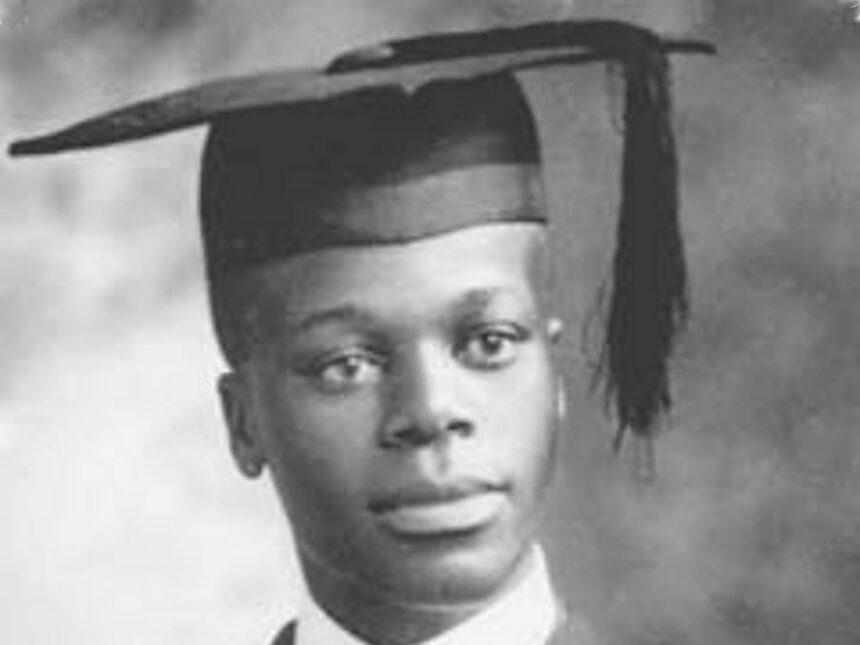
Dr Pixley kaIsaka Seme, who helped establish the African National Congress in 1912, had his tombstone erected in Inanda, north of Durban, by the Inkatha movement under Prince Mangosuthu Buthelezi.
This was revealed by University of Johannesburg historian Dr Bongani Ngqulunga during a recent interview with CMTV about his book, The Man Who Founded the ANC: The Biography of Dr Pixley kaIsaka Seme.
Ngqulunga said Seme had fallen out of favour with the African National Congress because of his leadership style.
“His presidency was the most controversial perhaps in the history of the ANC because Seme believed in his own abilities and perhaps at the expense of an accommodating leadership style,” said Ngqulunga.
He said Seme’s leadership had left the organisation in serious trouble by 1937.
Ngqulunga described Seme as an authoritarian leader who refused to listen to other people’s views.
During his 10 years as president, the organisation never held a National Executive Committee meeting, according to Ngqulunga’s book.
When Seme lost the leadership election in 1937, delegates were so relieved that they stood up and sang Nkosi Sikelel’ iAfrika.
Ngqulunga said Seme then tried to withdraw from the election after the results had already been announced.
Delegates questioned how he could withdraw from a contest he had already lost.
His troubled relationship with the organisation continued after he left office.
Ngqulunga said Seme was no longer highly regarded by the African National Congress when he died.
This gave Buthelezi an opportunity to honour him through Inkatha yeNkululeko yeSizwe, which later became the Inkatha Freedom Party.
There was also a family connection.
Seme’s second wife, Princess Phikisiwe kaDinuzulu, was the half sister of Buthelezi’s mother, Princess Magogo kaDinuzulu.
Seme and Buthelezi also spent time in Nongoma during the late 1930s and 1940s.
Ngqulunga said Buthelezi used Seme’s legacy to support his argument that Inkatha was continuing the work of the African National Congress founders, including Seme and John Dube.
This happened during the 1980s, when political violence between Inkatha and the United Democratic Front, which was aligned with the African National Congress, was tearing communities apart.
Ngqulunga also revealed that Seme faced serious money problems during his presidency.
The colonial government struck him off the roll of attorneys in September 1930.
Seme, who had worked as a lawyer in the Transvaal and owned a farm, lost everything and depended on handouts to feed his family.
Despite his troubled political career, Seme had been a highly educated and respected speaker.
He was born on 1 October 1881 in Natal and attended a local mission school.
An American missionary, Reverend S. C. Pixley, helped him attend Mount Hermon School in Massachusetts in the United States.
Seme later studied at Columbia University and Oxford University before qualifying as a lawyer in London.
His famous 1906 speech, The Regeneration of Africa, won him Columbia University’s George William Curtis medal for public speaking.
The speech included the words “I am an African”, which former President Thabo Mbeki later used in his famous 1996 speech in Parliament.
Seme’s words went on to become an important part of South Africa’s Africa Day and Heritage Month celebrations.