
- Home Affairs says the Constitutional Court ruling does not give asylum seekers citizenship or blanket legal status, and calls such claims false.
- The Public Servants Association says Home Affairs is at about 35% of its approved staff numbers and wants a capacity check first.
Home Affairs says false claims about the Constitutional Court’s asylum ruling are spreading, and it is taking action.
ActionSA and the Public Servants Association have also raised concerns about the department’s instruction to refugee reception offices to accept asylum applications. The instruction follows a ruling on 7 July that said people cannot be turned away from applying for asylum only because of how they entered South Africa or when they applied.
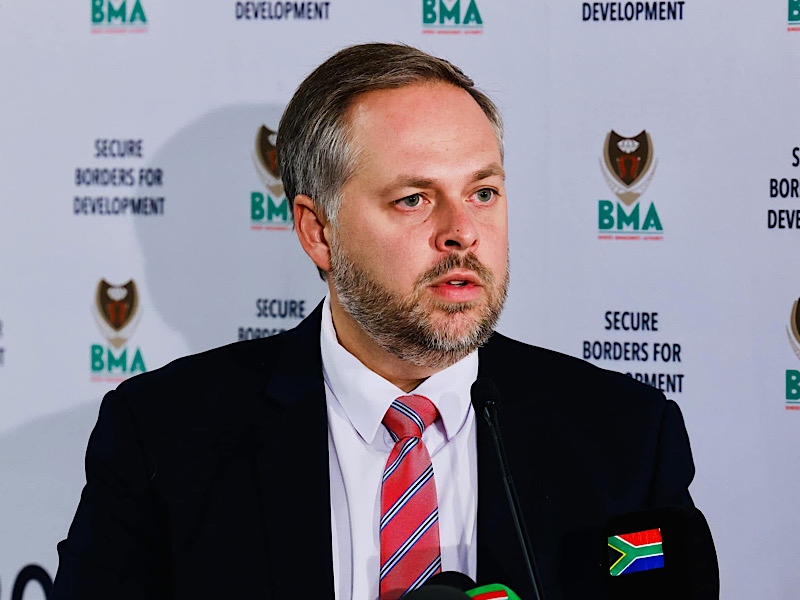
In a statement on Wednesday, the Department of Home Affairs said “nefarious actors” have launched a large-scale disinformation campaign targeting Home Affairs Minister Leon Schreiber and other officials. It said claims that the minister, the department or political parties decided to suspend “good cause” interviews for asylum seekers are false. These were interviews in which people without the right papers had to give a good reason before they could apply.
The department says it opposed the case in court, and that it issued its directive only to carry out the binding judgment.
It said claims that the ruling gives asylum seekers citizenship or blanket legal status are also false. It will refer the matter to the Electoral Commission of South Africa under its Code of Conduct on Countering Disinformation, ahead of the 4 November elections. The department said it will keep to its constitutional duties whether or not it wins a case, condemned those spreading the claims, and asked South Africans to check information before sharing it.
ActionSA’s parliamentary chief whip, Lerato Ngobeni, said the party views the directive with “grave concern”. She said the party accepts that Home Affairs is carrying out the judgment, but that the effects could be “disastrous” because the asylum system is already overwhelmed.
She said the directive also requires offices to issue asylum seeker visas once applications are lodged. Her main worry is the time between an application and a final decision, when people could be living in communities for years and become impossible to trace if their claims are rejected.
She asked Schreiber to say how many extra applications he expects, what money and staff will be added, how long decisions will take, how applicants will be registered, checked and tracked, how genuine refugees will be told apart from economic migrants, how the First Safe Country Principle will apply, how rejected applicants will be found and sent home, and whether the government will set up processing centres near the borders.
ActionSA has proposed keeping asylum seekers in centres near the borders while their claims are processed. It also proposed asylum permits that last no more than 12 months before they are reassessed, and a yearly national limit of 10,000 new asylum grants.
The Public Servants Association, which represents most Home Affairs employees, said offices may have to handle many more applications and work extra hours without anyone first checking whether there are enough staff. It said Refugee Reception Officers already do biometric enrolment, adjudication, permit extensions and appeal work. It said the department is at about 35% of its approved staff numbers, according to the information it has. It wants an urgent assessment of expected volumes, processing times, staff, buildings and resources at every affected office. It has asked to meet the department on Friday, 9 October.
It said its concerns are not aimed at asylum seekers, and that it reserves the right to use labour-relations, health and safety and collective bargaining processes if more work is added without proper checks.
This article has been updated for clarity.