
- Collectors may not call you on Sundays or between 9pm and 6am, and may not threaten, humiliate or mislead you.
- You cannot be jailed for owing money, and collectors need a court order before they can take your property.
Interest rates went up on 23 September, and many people were already behind. Eighty20’s credit stress report found that 41.8% of people with credit were three or more months behind on at least one loan in the second quarter.
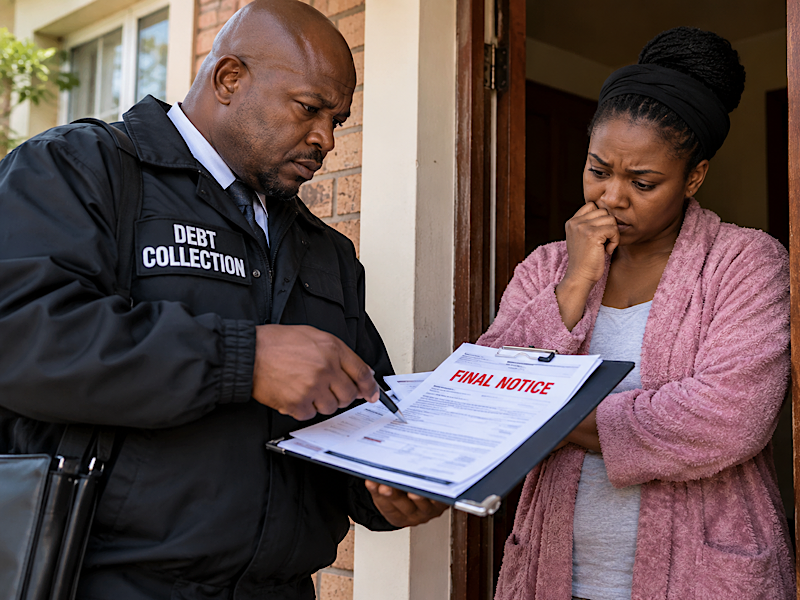
If a debt collector is calling you, here are your rights.
Collectors must be registered with the Council for Debt Collectors. Ask for their name and registration number.
They may not call you on a Sunday or between 9pm and 6am, unless you or your spouse asks them to. They may not threaten, humiliate or mislead you. They may not tell your employer, family, friends or neighbours about your debt. They also may not threaten to go to your employer before a court has ruled.
You cannot go to jail for owing money. A collector who says you will be arrested is not telling the truth. Ignoring a court order is different, so always answer court papers.
Collectors cannot just take your things. They need a court order. Before a lender can take you to court over a loan or store account, it must send a section 129 notice and wait at least 10 business days. The notice must suggest you ask a debt counsellor or another body for help.
If you are struggling, you can apply for debt review through a registered debt counsellor. While the review is on, lenders generally cannot take you to court over those debts, unless they end the review.
Keep a record of every call and message. To complain about a collector, put it in an affidavit to the Council for Debt Collectors (CFDC). Send it through cfdc.org.za or to [email protected], or phone 012 804 9808 for help. Complaints about lenders go to the National Credit Regulator on 0860 627 627. If someone threatens you, tell the police.